
Create a Welcome Book Guests Will Actually Use
Hosting, Guest Experience
The Welcome Book No One Reads (And the One They Actually Will)
Most welcome books get glanced at once and forgotten. Here’s how to create a short, beautiful guide your guests actually pull off the shelf — and what to leave out entirely.
Most welcome books are well‑intentioned and quietly useless. Forty laminated pages explaining how to use the dishwasher, three paragraphs on the history of the neighborhood, two pages of house rules in dense black text — and somewhere on page 27, the wifi password your guest has been frantically searching for since they walked in the door.
I once spent two full weekends creating the most beautiful welcome book I’d ever seen. Hand‑lettered title page. Page tabs. A lovingly researched section on local history. I was so proud of it. Then the reviews started coming in — and every single one mentioned the laminated one‑page cheat sheet I’d taped inside the kitchen cabinet with the wifi password and three coffee shop recommendations. The forty‑page beauty? Not a word. Guests flipped through, admired the photos, and put it back on the shelf. The cheat sheet was doing the entire job. I rebuilt my welcome book to six pages, and my reviews immediately improved.
1. The first page is the only page that matters
Treat your first page like prime real estate. This is not the place for a poetic welcome letter or a photo collage — it is where you answer the two questions every single guest has within five minutes of arriving:
What’s the wifi password?
What time is check‑out?
Put both on the front cover, not page three and not “easy to find.” Print the wifi details large enough to read from across the room. A tiny decorative font might look pretty in photos, but clarity is what feels welcoming when someone is juggling luggage, kids, and a dying phone battery.
💡 Pro Tip: Add a short, friendly line under the wifi, like “Settle in, log on, and make yourself at home.” It keeps things warm without taking up space.
2. Answer the questions guests actually ask
The best welcome books are built from your inbox, not your imagination. Scroll through past messages and look for patterns. You will probably see the same handful of questions over and over:
“How do I use the coffee maker?”
“Where do I put the trash and recycling?”
“Is there a hair dryer / iron / extra blankets?”
“How does the thermostat work?”
Those repeat questions become your sections. Give each its own heading and answer in two or three clear bullet points. If no one has ever asked about the architectural history of your street, it doesn’t need two pages. You’re designing a tool, not a brochure.
3. Make it scannable, not impressive
Guests don’t read welcome books like novels. They flip through searching for one specific answer. Your job is to make that answer jump out in seconds. Aim for:
Short, descriptive headings: “Coffee & Tea,” “Heating & Cooling,” “Trash & Recycling,” “Check‑Out Steps.”
Bullet points instead of paragraphs wherever possible.
Plenty of white space so nothing feels dense or intimidating.
A useful rule of thumb: if your welcome book reads like a short magazine article, it’s probably too long. If it reads like a well‑designed takeout menu — clear sections, quick descriptions, everything easy to spot at a glance — you’re on the right track.
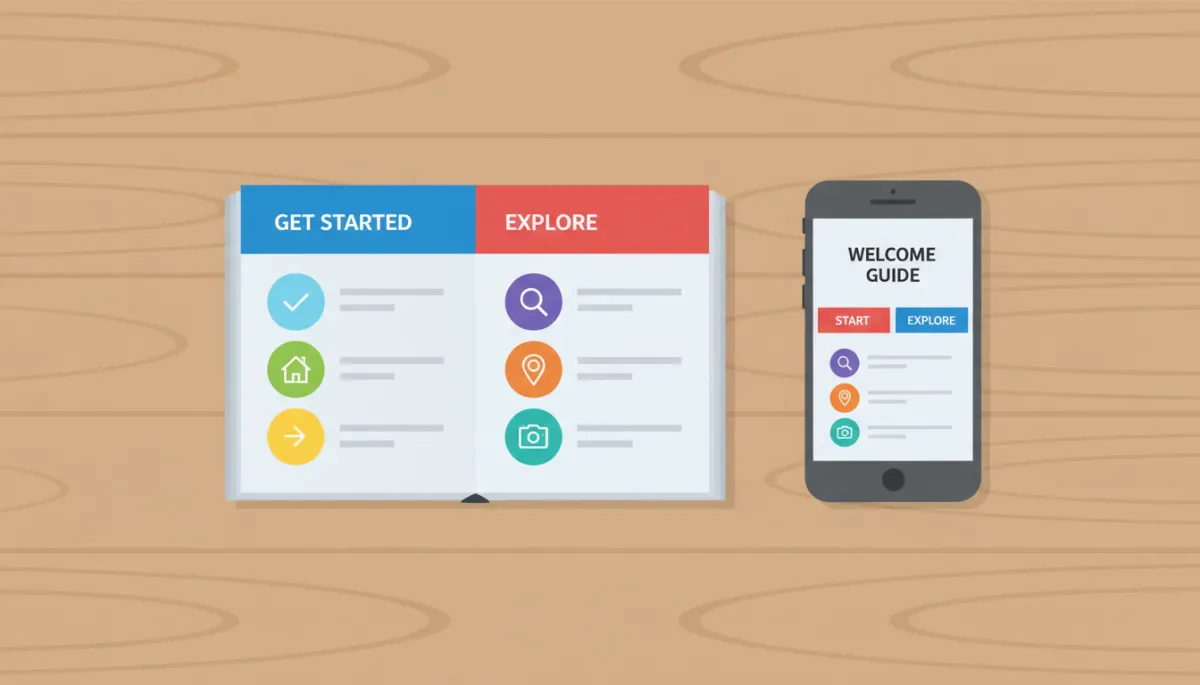
When guests can scan in seconds, questions drop and reviews get warmer.
4. Local recommendations beat tourist guides
Your guests already have Google, TripAdvisor, and every “Top 20 Things To Do” list at their fingertips. What they don’t have is you. The most valuable section of your welcome book is a short list of personal, specific recommendations:
The café you actually go to on Saturday mornings, plus what you order.
The bakery that sells out of croissants by 9 a.m.
The quiet trail that doesn’t show up in map apps but has the best sunset.
Three or four thoughtful picks with one‑sentence notes (“Order the cinnamon roll and sit in the back garden”) feel like advice from a friend, not a copied‑and‑pasted tourist guide. That feeling is what guests remember in reviews.
5. Keep both a physical copy and a digital one
Some guests love flipping through a booklet on the coffee table. Others never touch paper and do everything from their phone. You can make both groups happy with almost no extra effort:
Place a printed copy somewhere obvious — coffee table, entry console, or kitchen counter.
Send a PDF or link to an online version the day before check‑in so guests can skim on the way.
Matching physical and digital versions also means you only have to update one master document. Copy‑and‑paste, print a few new pages, and you’re done.
6. Update it every six months
An out‑of‑date welcome book is worse than no welcome book at all. If you rave about a restaurant that closed last year or a trail that’s shut for winter maintenance, guests end up frustrated — and that frustration often shows up in reviews.
Put a reminder on your calendar twice a year to:
Click through every recommendation and check hours, locations, and menus.
Confirm that appliances, wifi details, and check‑out steps are still accurate.
Remove anything guests no longer ask about and add any new FAQs.
A quick, deliberate refresh keeps your book feeling current and trustworthy, which quietly builds confidence from the moment guests arrive.
7. The check‑out section gets read more than you think
Most guests genuinely want to leave your place in good shape. What they dread is guessing what “good shape” means. That’s why the check‑out section is one of the most‑read parts of any welcome book, often at 10 p.m. the night before departure or 7 a.m. on the way to the airport.
Make this section impossible to miss. Use a bold heading like “Before You Leave” and keep the list short and specific:
“Please start the dishwasher before you go.”
“Towels can stay on the bathroom floor.”
“Place trash in the outdoor bin by the driveway.”
Skip vague “if possible” language that leaves guests unsure. Clear expectations feel kinder than polite ambiguity — and they lead to smoother turnovers for you.
A welcome book that actually feels welcoming
Your welcome book is not a place to prove how thoughtful you are. It’s the place where you make your guest’s first hour — and last morning — as easy as possible. When the wifi password is on the cover, the real questions are answered in plain language, and the local tips sound like notes from a friend, guests feel looked after without needing to send a single message.
The hosts who understand that difference are the ones whose reviews mention how “welcoming” the property felt. Not because they wrote the longest welcome book, but because they wrote the one their guests actually used.