Scaling Your Property Portfolio: Essential Tech Tools
Systems, Tech Stack, Portfolio Growth
Scaling from 1 to 5 Properties: The Tech You Need
What worked for a single unit will break at five. Here’s the lean, practical tech stack that lets you grow your portfolio without losing your weekends—or your sanity.
There’s a moment that hits every multi-property host. You’re standing in your kitchen with a coffee in one hand, your phone in the other, and three different messages from three different guests on three different platforms—and you realize you have no idea which property you’re answering about. The systems that worked beautifully for your first rental have quietly broken under the weight of the second and third. The good news: this is a sign you’re growing. The better news: it’s fixable in a weekend.
The $1,400 Lesson: Why Tech Matters Before Property #3
I will never forget the Friday I got double booked. It was my third rental, two months in, and I was still running my whole business out of a color-coded Google Sheet and I had to open multiple apps, Airbnb & VRBO on my phone. A family from Calgary checked in at 3 PM. Another family from Seattle pulled into the driveway at 4:15 PM with their confirmation email in hand. Both had paid. Both were standing in front of me with their kids and their suitcases.
I put the Seattle family up at a nearby hotel on my own dime, refunded their stay, sent them a handwritten apology and a $200 restaurant gift card, and still earned a three-star review that took four months to bury. The whole disaster cost me roughly $1,400 in direct expenses and probably $3,000 in lost future bookings. A simple property management tool would have cost me about $100 a month. I signed up that night.
📌 Key Takeaway: If you’re adding property number two or three, you don’t have a “busier hosting hobby” anymore—you have a small business. Your tech stack needs to catch up.
1. Your Property Management Tool: The Brain of the Operation
A property management tool—often called a PMS—is the calendar, inbox, and pricing brain of your business in one place. Without one, you will double-book within sixty days of adding a second property. Not “might.” Will.
For hosts growing from one to five short-term rentals, three platforms consistently stand out:
Hospitable – Widely praised for its warm, intuitive interface and powerful automation. It offers AI-assisted messaging, dynamic pricing, and smart lock integrations, making it ideal if you want something you can actually enjoy using on a Monday morning.
OwnerRez – The “power user” option. Incredibly flexible, with deep channel management and strong accounting workflows, but with a steeper learning curve. Best if you love tinkering with settings and see yourself scaling beyond a handful of units.
Hostfully – Built with professional managers in mind, especially if you manage properties for other owners. It includes polished guest guidebooks, direct booking tools, and robust integrations, though at a higher price point.
Industry comparisons in 2026 consistently show Hospitable leading on usability, OwnerRez on depth, and Hostfully on “all-in-one” polish. Try the free trials, click around, and pick the one whose dashboard you don’t dread opening. That’s the only test that really matters.
2. Calendar Synchronization: Ending the Double-Booking Nightmare
The reason hosts get double-booked is painfully simple: your Airbnb calendar doesn’t know what your Vrbo calendar is doing, and neither of them knows about the direct booking that came in last night. At one property, you can babysit this manually. At three or five, it becomes a full-time job—and a risky one.
Most modern property management tools handle this for you. They sync availability across every platform you list on, often in near real time. Before you pay for anything else, confirm that your PMS offers:
Direct connections to Airbnb, Vrbo, and Booking.com (not just basic iCal links).
Instant blocking of dates when a booking is confirmed on any channel.
Clear visual calendars so you can glance and see which property is where.
💡 Pro Tip: Do a “stress test” weekend—simulate three bookings on three channels and confirm every calendar updates correctly. Fix the cracks now, not during your next fully booked holiday.
3. Smart Locks: One Brand, Every Door
At one property, a smart lock is a nice convenience. At three or four, it’s the only reason your weekends still exist. No more 3 AM calls because a guest lost the key. No more driving across town to let a cleaner in. Smart locks with remote access and temporary codes are quickly becoming standard for rentals, and industry research suggests adoption will only accelerate through 2026 as features like temporary codes and access logs become even more refined.
The key is consistency. Pick one brand—August, Schlage Encode, or Yale Assure are all strong, widely used options—and use it everywhere. That way, your cleaners, co-hosts, and maintenance people only have to learn one system. Even better, connect your locks to your PMS so each reservation automatically gets its own unique code that activates at check-in and deactivates at checkout.
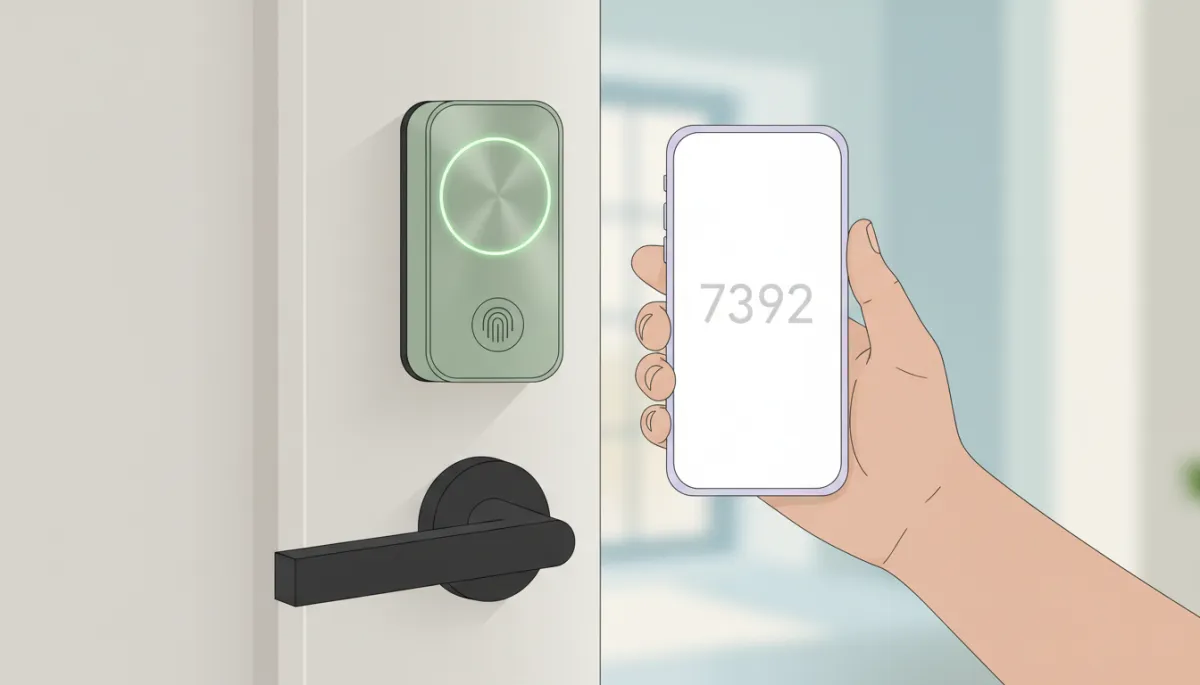
Automating access codes turns late-night key problems into non-events for growing hosts.
4. A Real System for Your Cleaning Team
Your cleaning crew cannot live in your text messages. By the time you’re juggling two or three turnovers in a day, the “Hey can you also bring more toilet paper to Cedar Loft?” texts pile up faster than anyone can keep track of. Missed messages turn into missed details, and missed details turn into four-star reviews that quietly cut your revenue.
Tools like Breezeway, Turno, or Operto translate every checkout into a clear, scheduled task: property-specific checklists, photo verification, restocking notes, even auto-scheduling based on your bookings. Many PMS platforms also integrate directly with these tools so new reservations automatically create cleaning jobs.
📌 Key Takeaway: Treat your cleaners like an extension of your brand. The right system gives them everything they need to deliver “hotel-level” consistency without you micromanaging every turnover.
5. One Inbox, Not Five Apps
By the time you have three properties on Airbnb, two on Vrbo, and a direct booking site, you’re checking five different inboxes before you’ve even had your first coffee. That’s how messages get missed, response times slip, and your “Superhost” status quietly disappears.
Your property management tool should pull every guest message—across every platform—into a single inbox. Many, like Hospitable, even layer AI-assisted replies and scheduled messaging on top, so guests get instant, thoughtful responses while you’re living your life. If your PMS doesn’t centralize communication, get a different tool. There is no medal for managing chaos.
6. Separate Business Bank Account: No More Money Pile
Open a separate business bank account the day you start your second property. When every cleaning invoice, smart lock subscription, and new duvet cover all hit the same personal checking account, you lose the ability to see which property is actually paying for itself—and which one is quietly draining you.
A dedicated business account lets you:
Separate personal and business expenses for cleaner taxes and potential audits.
Pay yourself a clear “owner draw” instead of just spending whatever is left.
Quickly see cash flow and reserves for repairs, upgrades, and slow seasons.
7. Bookkeeping Tools: See Which Property Is Winning
Once you have a separate account, you need a simple bookkeeping system to keep the numbers straight. You cannot wait until next March to figure out which property is actually profitable. And you definitely don’t want to discover that the “star” property you keep upgrading has been losing money for twelve months.
Two solid options for small but growing portfolios:
QuickBooks Online – The generalist workhorse. Connects to your bank, categorizes transactions, and lets your accountant step in easily at tax time.
Stessa – Built specifically for rental properties, with dashboards that show income, expenses, and performance by property.
Whichever you choose, set up rules so each expense is tagged to the right property. That way, a single report can tell you exactly which unit deserves your next upgrade—and which one needs a pricing or strategy change.
8. Shared Documents: Getting Your Business Out of Your Head
The moment you go from being the only person who does everything to having help—a cleaner, a co-host, a virtual assistant—every recurring task in your business needs to live somewhere outside your brain. Otherwise, you become the bottleneck everyone waits on for answers.
A simple shared document in Notion, Google Docs, or Trainual is enough to start. Document:
Standard check-in and checkout messages for each property.
Cleaning standards and photos of “what good looks like.”
Maintenance contacts, preferred vendors, and how to reach them quickly.
Emergency procedures: leaks, lockouts, power issues, neighbor complaints.
💡 Pro Tip: Any time you answer a question twice, turn your answer into a line in your shared playbook. That’s how systems quietly build themselves.
Bringing It All Together: A Weekend to Future-Proof Your Portfolio
Growing from one to five properties doesn’t reward the host who answers the most messages or personally inspects every pillow. It rewards the host who quietly builds the systems that let her stop being the only one holding everything together.
In a single focused weekend, you can:
Choose a property management tool and turn on full calendar synchronization.
Standardize smart locks across your properties and connect them to your PMS.
Set up a cleaning operations tool and invite your team into it.
Open a separate business bank account and connect a bookkeeping tool.
Start a shared document that captures your repeatable tasks and standards.
Do that, and the next time you’re standing in your kitchen with your coffee and your phone, you’ll still have three messages from three different guests. But this time, you’ll know exactly which property each one belongs to—and your systems will already be halfway to answering them for you.